A 20-minute call
We check whether there's a real fit, and whether the person who can say yes is on the call. If there is, I ask for a few examples of the work before we map it.
Book the 20-minute callThe method
"Can you get AI to answer the questions our clients keep emailing us?"
"Give me something that can draft a pitch deck."
This is the most common way businesses walk in the door. They've seen what AI can do and want it pointed at their specific pain point. It's a fair request, and it usually points at the right pain. Going straight to the tool skips the step that makes any tool work.
An AI agent needs the same things a new hire needs: defined inputs, clear decision criteria, explicit boundaries, and a process that routes its work to the next step. Without those, you get a language model producing plausible output with nothing to check it against, which is what most chatbots and custom GPTs turn out to be.
In most growing firms those things don't exist yet. The work was never designed. It grew up around a few people who carry it, and it still runs through them. I call it the third people problem: the right person, in the right seat, simply overloaded. There's no people fix for it. It's a design problem, not a people problem.
The Ford Assembly Line
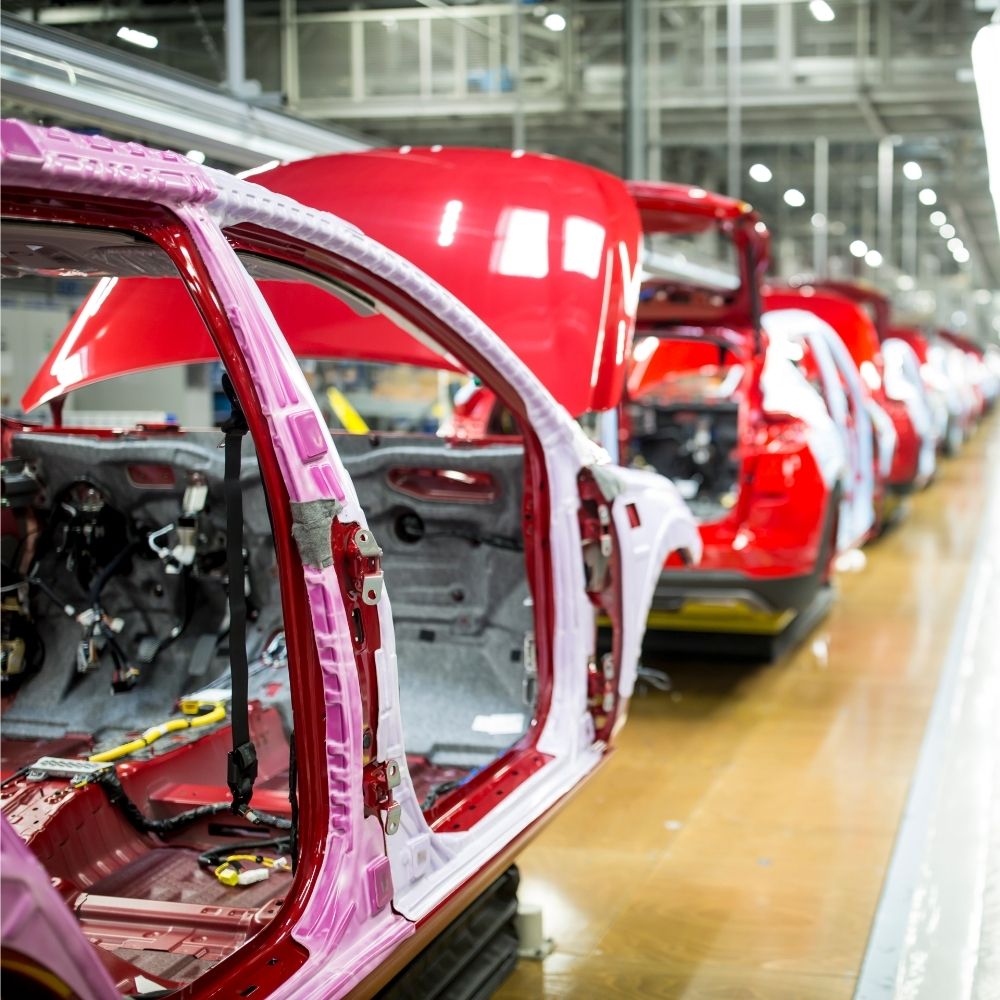
Here's the part most people get backwards. Everyone remembers Henry Ford for the moving assembly line, which cut the time to build a Model T chassis from more than twelve hours to about an hour and a half.
The line came last, and it only worked because of what came before it. In 1906 Ford's cars were built one at a time at fixed stands. The parts weren't quite identical, so skilled fitters filed and adjusted each one until it seated, and every man had his own way of making them meet. Every car had to pass through their hands, and hiring more of them only bought more of the same ceiling.
That year the Model N launched at $500 and became the best-selling car in America, and orders ran ahead of what the shop could fit. Those were the years Ford's engineers began designing the hand-fitting out, making the parts interchangeable so a part went in because it was made to go in. They finished the job on the Model T in 1908. The moving line didn't arrive until 1913. Run a moving line on hand-fitted parts and all you get is chaos moving faster.
What the best fitters knew went into the tools, the fixtures and the gauges. The work no longer had to squeeze through a few pairs of hands.
Most growing firms are standing in Ford's 1906 shop. The work funnels through the same few people because the business grew around them. Sometimes it's a call only they know how to make. Sometimes there's simply more of it than their hours can hold. Or several parts of the business need them at the same moment, on top of a job that was already full.
So I work in Ford's order on purpose: design the system first, then let agents run the repeatable work inside it. Once the system is designed, AI is how it scales.
Admentus redesigns the work that funnels through a few key people into a system they own, so they stop being the ceiling on your growth.
How it runs
We check whether there's a real fit, and whether the person who can say yes is on the call. If there is, I ask for a few examples of the work before we map it.
Book the 20-minute callWe spend ninety minutes on a shared whiteboard with you and the people who run the system. We map how the work runs today, with your numbers on it, and sketch which steps an agent could take on. There's no charge, and you keep the map.
See what happens in the sessionI play back what you told me in your own words and lay out the whole system, role by role. Then I specify the first piece in full, down to the number it should move and what it costs. The pieces after it are listed, and each is priced when the one before it finishes.
Each milestone takes one part of the map and designs it before it builds it, Ford's order at small scale. Each one runs two to four weeks at a fixed fee and ends with agents running on real work. Your key people shape the rules and own them, down to where an agent hands the work back to a person. That design holds whether each role is staffed by an agent or a person.
Live agents need someone keeping them running. Once the first milestone goes live, I operate and maintain the system and report the numbers it's accountable for. The seat grows with each milestone, on terms you see in writing before the first one starts. When one system runs, the next one starts with a new map.
In practice
Take a 22-person marketing agency that wins new accounts through a pitch process with no dedicated team. The creative director scopes every RFP herself, on top of running the agency's live client work: she reads the brief, sketches positioning, and writes the strategic rationale before anyone on the creative team can start.
One pitch at a time, it works. Two in the same month, and the client work she's also responsible for starts slipping, deadlines move, feedback rounds stack up, and something gets sacrificed. Her judgment is fine. What breaks is that every pitch lands on her at once, on top of a job that was already full. Her request: "Build me something that can draft a pitch deck outline."
Here's what that looks like once the pitch process is designed and the agents are running inside it:
The creative director still writes the actual strategy and signs off on every word. She can start at 60 to 70 percent complete instead of a blank deck. Two pitches in the same month stop being a crisis. She owns the system the pitches run through, and she stops being the ceiling on how many the agency can take on.
Where to start
It's free, and there's no form or pitch. Tell it how your business actually runs and get a first read on where it's stuck.
Start the conversationBook a 20-minute call. If there's a fit, we spend ninety minutes mapping how the work runs. There's no charge for either.
See the mapping session